Voices of U of U Health
The Human Side of Medicine: Why Ethics, Arts, and Humanities Matter in Medical Education
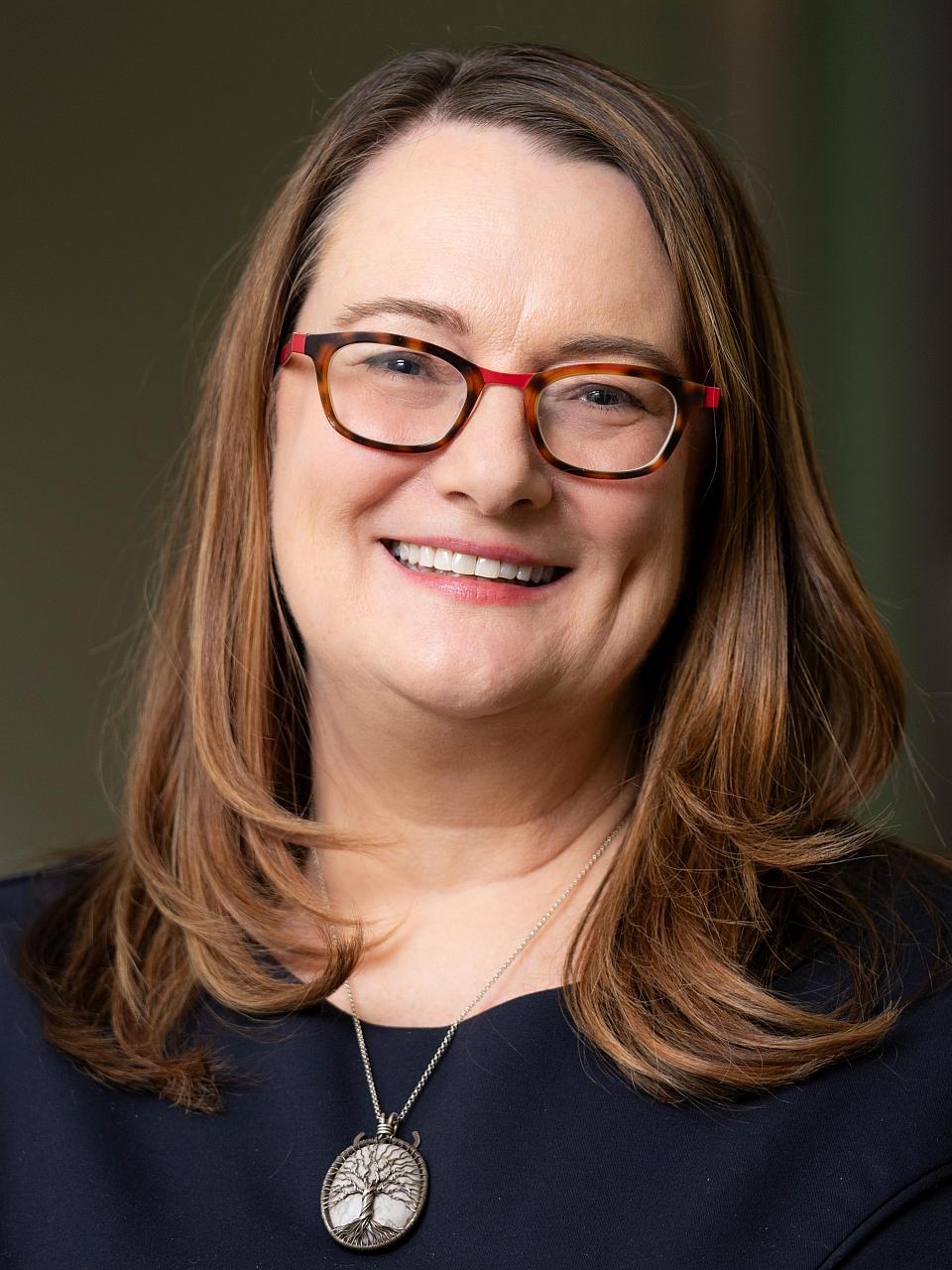
By Gretchen Case, PhD, MA
Health care professionals need the scientific knowledge and clinical expertise to care for the human body. They also need the skills to care for the human being, the whole person.
The human side of medicine calls for a deeper awareness of people and their experiences. Noticing what is not being said. Making difficult decisions when there is no perfect answer. Understanding how illness or injury changes a person’s life. And finding opportunities to reflect on how caring for others changes you personally and professionally.
At University of Utah Health, the Center for Health Ethics, Arts, and Humanities (CHEETAH) creates opportunities to develop this human side of health care. Through health humanities, we draw on different ways of seeing, thinking, and understanding to prepare students for the human complexities they will encounter throughout their careers.

Art in Medical Education
Every year, I look forward to teaching the Art in Medicine course with my physician colleague Sarah Cipriano, MD. Dermatologists like Cipriano rely on their ability to see what’s happening with a patient as much as any other clinical skills or knowledge. They train their eyes to look at skin just as an artist does a canvas, making Cipriano a perfect partner for teaching medical students why arts-based approaches make a difference in their training.
This year, for their final project, we gave each student an outdated white coat that would otherwise have been discarded. We asked them to use the coat to create a piece of art that reflected their training and commitment to medicine.
White coats worn in clinics, hospitals, and patient rooms are one of the most recognizable symbols of medicine. This project gave students a way to ask: What role am I stepping into? What am I carrying with me? How am I seen?
These smart, creative students met that challenge by painting, drawing, cutting, quilting, photographing, and completely reimagining what a white coat can represent.
Creating Space to Reflect
In addition to the visual arts, we explore dance, music, theatre, film, and many other artistic traditions in this course. Equally important to the art we study and create together is the space for reflection that this course provides.
Medical school asks students to be in constant motion. There’s always another patient, exam, or fact to learn. Courses like Art in Medicine give them a guided opportunity to think about what they’re seeing, feeling, and carrying in their training.
Evan Kirk, a fourth-year medical student who took the course in 2026, called it “a much-needed pause and moment to reflect.” He said the course gave him “a space to share those experiences with my peers” and helped him feel “more grounded and connected.”
Kirk also talked about the movement session, led by Eric Handman, MFA, associate professor at the University of Utah School of Dance, noting that observing his body “in space and in time” was something he rarely thinks about in medicine. And “it was just fun.”
Joy, play, movement, and curiosity all belong in how we learn, in medicine as much as anywhere else.

Education for Everyone
The Center for Health, Ethics, and Humanities collaborates across campus and beyond to bring health humanities education to more people at the U and across Utah. We’re proud to be partners of the new undergraduate major in medical humanities, the only one in the Mountain West.
The Art in Medicine course is just one of the many options. Medical students can also choose from other courses in the Health Humanities curriculum, like:
- Narrative, Writing, and Medicine
- Health Law for Non-Lawyers
- Bioethics and Clinical Ethics
We plan to further expand what we offer to everyone on campus, from health sciences units and clinical teams to any interested students, staff, or faculty.
The center's staff and faculty also educate through our regular discussion series:
These are open to everyone and eligible for continuing medical education (CME) credits.
What’s New and Next
Ethics is a practice as well as a field of study, and we were proud to establish the clinical ethics consultation program at University of Utah Health in 2024. Clinical ethicists are employed by hospitals and clinics to assist when a care team, patient, or family are faced with difficult ethical questions.
Clinical ethics is one of the fastest growing fields of medicine. We’re building a program that can have an important national presence. In March 2027, the Center for Health, Ethics, and Humanities will host the national meeting of the Health Humanities Consortium in Salt Lake City.
This annual conference brings together scholars, clinicians, artists, writers, students, community members, and others who think about health, illness, care, ethics, history, literature, and so much more. It’ll be the first time the conference is held in the Mountain West, and we’re excited to bring that conversation here. We’ll share more in the coming months as the program takes shape.
As medicine changes rapidly through the promises of new technology, I hope you’ll join us in looking at what will always be true: Health care is humans caring for humans. We must understand, support, and explore what it means to be human and have a body in need of care.
Those questions belong everywhere we live and work and in all the systems we build around health care. At the Center for Health, Ethics, and Humanities, we want to make more room for education and conversation. Come meet our extraordinary people and help us find new colleagues and resources to reach our full potential, locally and nationally.